

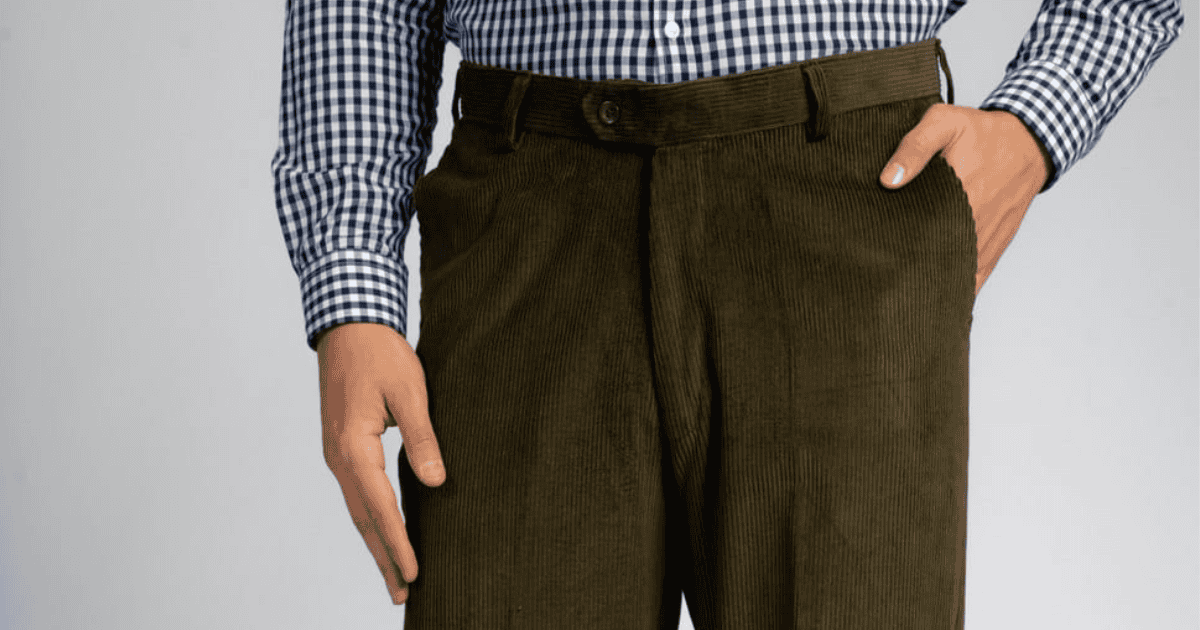
Corduroy trousers have a certain charm that never quite fades, don’t they? Those distinctive ridges, the soft texture, and that reassuring weight make them a staple in any wardrobe worth its salt. Whether you’re trudging through a damp British autumn or dressing up for a cosy pub lunch, corduroy trousers just seem to fit the bill. They’ve been around for centuries, evolving from humble beginnings to a symbol of style that’s both practical and effortlessly cool.
Let’s start at the very beginning, because the story of corduroy is as bumpy as its famous wales. Most experts point to ancient Egypt, specifically the city of Fustat around 200 AD, as the birthplace of fustian, a heavy cotton fabric with a raised nap. This was no delicate silk; it was tough stuff, blended sometimes with wool or linen, designed to stand up to hard use. Italian and Spanish merchants brought it to Europe in medieval times, where it warmed the linings of gowns and doublets for the elite. King Henry VIII apparently loved it for his court clothes, earning it a nickname like ‘corde du roi’ or king’s cord, though that’s more legend than hard fact.
From Manchester Mills to Working-Class Hero
Fast forward to the 18th century, and Britain takes centre stage. Manchester’s dark satanic mills during the Industrial Revolution perfected corduroy as we know it today. Textile whizzes there developed cutting machines that sliced the fabric’s dobby weave into those iconic ridges, or wales, then brushed it for that velvety pile. The name? Probably a mash-up of ‘cord’ for the ribs and ‘duroy’, a coarse woollen fabric knocking around at the time. No fancy French royalty needed.
Corduroy trousers became the go-to for mill workers, farmhands, and anyone needing gear that could take a beating. It was the poor man’s velvet, lightweight yet warm, rugged without being stiff. Friedrich Engels, hanging out in Manchester in 1844 researching his book on the working class, noted how fustian jackets and trousers were everywhere among labourers. It was a badge of pride, a silent statement of class during movements like the Chartists, who wore it to show they meant business.
By the Victorian era, corduroy trousers had trickled up a bit. Schoolmasters and academics adopted them, giving the fabric a whiff of intellectual rebellion. Bohemian artists across Europe tailored it into suits and jackets, loving how it screamed ‘I think for myself’ without saying a word.
Rock ‘n’ Roll Revival and Beyond
Post-war Britain saw a dip; rationing and synthetic fabrics pushed corduroy trousers to the sidelines. But then came the 1960s counter-culture wave. Just like denim in America, corduroy found its rockstar moment. Mick Jagger, John Lennon, and The Beatles all rocked it, with Paul, George, and Ringo leading the charge. Edward Heath, then President of the Board of Trade, cheekily credited the Fab Four with saving the British corduroy industry. Imagine that: four lads from Liverpool propping up Manchester’s mills.
The 1970s exploded with corduroy everywhere, from flares to wide-leg styles. It went global, though in places like Portugal it’s linked to bombazine, and in Greece and Cyprus, it’s just called Manchester. Even today, it’s big in British country clothing, perfect for landowners and city folk pretending to be one.
Why Corduroy Trousers Still Rule the Wardrobe
So what keeps corduroy trousers relevant in 2026? It’s all about versatility. The wales come in different sizes: fine wale (around 16-20 per inch) for a sleek look, wide wale (under 10) for that bold, chunky vibe. Made from cotton, often with a touch of elastane now for stretch, they’re breathable yet insulating, ideal for our unpredictable UK weather. Pair them with a chunky knit for winter walks in the Peak District, or roll them up with boots for a festival weekend.
Styling them is a doddle. Go classic with a tweed jacket and brogues for that countryside gent feel. Or mix it up: slim-fit corduroy trousers under a denim shirt and trainers for urban edge. Colours? Chocolate browns, olive greens, and navy blues never fail, but don’t sleep on mustard or rust for autumn flair. They’re forgiving too; the texture hides a multitude of sins better than smooth wool.
Care’s straightforward: wash at 30 degrees, inside out to preserve the pile, and air dry. No tumble dryer drama. Last for years if you treat them right, which is more than you can say for fast fashion jeans.
Thinking of adding some to your rotation? Places like corduroy trousers specialists offer proper British fits that nod to tradition without skimping on comfort. It’s that blend of heritage and everyday wearability that hooks you.
A Fabric with Soul
Corduroy trousers aren’t just clothes; they’re a slice of history you can wear. From Egyptian weavers to Beatles fans, they’ve dressed rebels, workers, and royals alike. In a world of disposable trends, they remind us that good things endure. Next time you’re out and about, spot someone in a pair. Chances are, they’re onto something special. Grab yours and join the club; your legs will thank you.
And there you have it, a deep dive into why corduroy trousers deserve a prime spot in your closet. They’ve weathered industrial revolutions, cultural shifts, and fashion fads, emerging stronger each time. Whether for practicality or pure style, they’re hard to beat.
